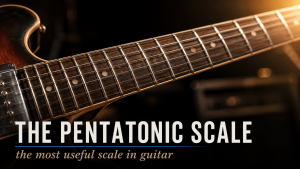
As a jazz guitarist, I’m always searching for new ways to create stunning colors and textures in my solos. One of the most powerful techniques I’ve discovered is pentatonic super-position – using different pentatonic scales over a single chord to create tension and release. In this session, I’ll share my approach to pentatonic super-position and show you how to unlock its secrets on guitar.
The Power of Pentatonic Super-Position on Guitar
I first stumbled upon the concept of pentatonic super-position at a gig in Brooklyn. I was playing over a simple chord progression in A minor, using the A minor pentatonic scale, but I felt like I was just repeating the same old licks. In a moment of frustration, I grabbed the E minor pentatonic scale and played it over the A minor chord. Suddenly, I heard new colors and tensions that I had never explored before.
Pentatonic super-position is the idea of using a scale you know, like the A minor pentatonic or E minor pentatonic, over a different chord to create new sounds and textures. By borrowing from related keys and modes, you can add depth and complexity to your solos without learning new scales.
Step 1: Master the A Minor Pentatonic Scale on Guitar
Before we dive into pentatonic super-position, it’s crucial to have a deep understanding of the A minor pentatonic scale. This scale is the foundation of countless guitar solos and licks, and you need to know it inside out.
The notes of the A minor pentatonic scale are:
- A, C, D, E, G
Practice playing the scale up and down the fretboard, using different positions and fingerings. As you play, focus on relating each note to the tonal center of A. Sing the notes as you play them to internalize the sound of the scale.
Step 2: Explore the E Minor Pentatonic Over A Minor on Guitar
Now that you have a solid grasp of the A minor pentatonic scale, let’s explore the first super-position: the E minor pentatonic scale over an A minor chord.
The notes of the E minor pentatonic scale are:
- E, G, A, B, D
When you play these notes over an A minor chord, you create new colors and tensions. The E becomes a 5th, the B becomes a 9th, and the D becomes an 11th. These extensions add depth and complexity to your lines.
Try shifting between the A minor pentatonic and E minor pentatonic scales over an A minor chord. Listen to how the scales interact and create new sounds. Experiment with emphasizing different notes and creating melodic phrases that exploit the tensions between the scales.
Step 3: Introduce the B Minor Pentatonic Over A Minor on Guitar
The next super-position we’ll explore is the B minor pentatonic scale over an A minor chord.
The notes of the B minor pentatonic scale are:
- B, D, E, F#, A
When you play these notes over an A minor chord, you create even more tension and release. The F# becomes a natural 6th, which adds a sense of brightness and lift to your lines. The B and E create a 9th and 5th, respectively, while the D becomes an 11th.
Practice shifting between the A minor, E minor, and B minor pentatonic scales over an A minor chord. Listen to how each scale creates a unique color and texture. Experiment with combining phrases from different scales to create melodic interest.
Step 4: Experiment with the D Minor Pentatonic Over A Minor on Guitar
The final super-position we’ll explore is the D minor pentatonic scale over an A minor chord.
The notes of the D minor pentatonic scale are:
- D, F, G, A, C
When you play these notes over an A minor chord, you create a lot of tension and dissonance. The F becomes a b13, which can clash with the underlying harmony. The C becomes a b3, which creates a sense of darkness and melancholy.
Because of the inherent dissonance, the D minor pentatonic scale should be used sparingly over an A minor chord. Try emphasizing the D and G, which create an 11th and b7, respectively, and use the F and C as passing tones or chromatic approaches.
Step 5: Practice Shifting Between Different Pentatonic Scales
To master pentatonic super-position, you need to practice shifting between different scales smoothly and seamlessly. Start by getting comfortable with one position on the fretboard, like the 5th position A minor pentatonic shape.
From there, practice shifting to the E minor, B minor, and D minor pentatonic scales while maintaining the same root note. Focus on creating melodic phrases that transition between the scales and exploit the unique colors and tensions of each one.
As you practice, let yourself explore the sounds and colors of each scale. Don’t worry about playing the “right” notes or making perfect phrases. The goal is to internalize the sound and feel of each scale and develop your ear for the subtle nuances of pentatonic super-position.
Step 6: Internalize the Sounds and Feel the Colors
The key to mastering pentatonic super-position is to internalize the sounds and feel the colors of each scale. This means going beyond just playing shapes on the fretboard and really hearing and feeling the notes.
As you practice, sing the notes of each scale as you play them. This will help you internalize the sound and develop your ear for the unique colors and tensions of each scale.
Experiment with different rhythms, articulations, and phrasing to bring out the character of each scale. Try bending notes, sliding into phrases, and using vibrato to add expression and emotion to your lines.
Most importantly, give yourself time to process and explore the colors of each scale. Pentatonic super-position is not a quick fix or magic trick – it’s a deep and nuanced approach to improvisation that requires patience, practice, and creativity.

Frequently Asked Questions
What is pentatonic super-position on Guitar?
Pentatonic super-position is the technique of using different pentatonic scales over a single chord to create new colors, tensions, and textures in your solos. By borrowing from related keys and modes, you can add depth and complexity to your playing without learning new scales.
What scales can I use over an A minor chord?
Over an A minor chord, you can use the A minor pentatonic, E minor pentatonic, B minor pentatonic, and D minor pentatonic scales. Each scale creates a unique set of colors and tensions that you can explore and exploit in your solos.
How do I make the D minor pentatonic sound good over A minor?
The D minor pentatonic scale contains some notes that clash with the underlying A minor harmony, particularly the F (b13) and C (b3). To make this scale sound good, focus on emphasizing the D (11th) and G (b7), and use the F and C as passing tones or chromatic approaches. Use the scale sparingly and listen carefully to how it interacts with the chord changes.
Wrapping Up
Pentatonic super-position is a powerful tool for any guitarist looking to expand their soloing vocabulary and create new colors and textures in their playing. By mastering the A minor pentatonic scale and exploring the E minor, B minor, and D minor pentatonic scales over an A minor chord, you can unlock a world of creative possibilities.
Remember, the key to mastering pentatonic super-position is to internalize the sounds and feel the colors of each scale. Take your time, practice slowly, and let yourself explore the unique tensions and releases of each scale. With patience and creativity, you’ll be able to add depth, nuance, and emotion to your solos and take
Visit my website: rotemsivan.com.
Join me on Patreon: patreon.com/Rotem/Sivan
See you guys soon! Peace Out