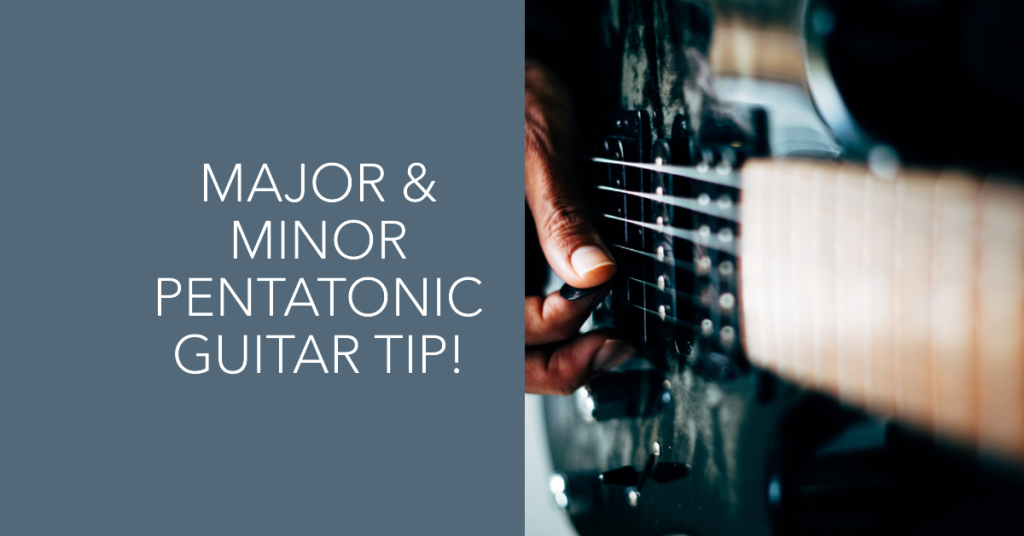
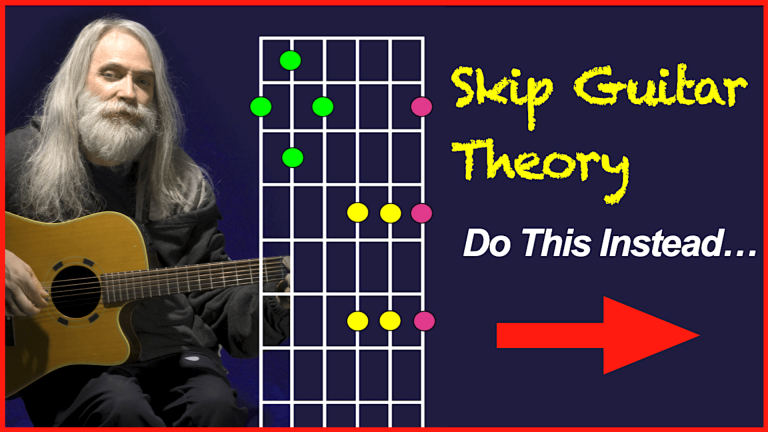
if you really want to master your major and minor pentatonic licks… this simple guitar tip involving power chords will change your solos instantly.
Major & Minor Pentatonic Guitar Tip!
If you really want to master your major and minor pentatonic licks, this is the tip for you. It’s something you can put into your guitar playing and guitar solos right now. And if you find it valuable, you should follow—if you’re not already following.
Improvising with the 1-4-5 Progression
You should really start to improv with 1-4-5 chord progressions. However, there is a specific way you need to approach this to get the most out of your practice session.
Using Power Chords
Specifically, you want to use 1-4-5 chord progressions that aren’t major or minor chords. So, we are just doing things like power chords through your 1-4-5 progressions. This distinction is crucial for how we apply our scales over the backing track.
Why This Technique Works
When we do that—when we stick to power chords—and we leave out the thirds, we leave out that major or minor quality. By removing the third interval, the chord becomes ambiguous.
This means you are playing notes that exist in both the major and minor key signatures of whatever note you’re starting on for the one. This gives you the freedom to experiment with both major and minor pentatonic sounds without clashing with the underlying harmony.
Frequently Asked Questions
- How can I master my pentatonic licks?
- If you really want to master your major and minor pentatonic licks, this is the tip for you.
- What type of chord progression should I use?
- You should really start to improv with 1-4-5 chord progressions.
- What specific chords should I play?
- Use progressions that aren’t major or minor chords; just doing things like power chords.
- Why are power chords effective for this exercise?
- When we do that, we leave out the thirds and leave out that major minor quality.
- What is the benefit of leaving out the third?
- You are playing notes that exist in both the major and minor key signatures of whatever note you’re starting on.