Feeling stuck playing guitar modes from the root note every time? The secret to unlocking the fretboard isn’t learning new patterns, it’s about how you practice them… This simple trick will change everything.
The Secret to Mastering Modes on the Guitar Fretboard
Hey, in this lesson, we’re going to talk about how to practice different modes across the fretboard. A lot of players learn the scale patterns, but they get stuck always starting from the beginning. This method will break you out of that habit and get you more familiar with the entire neck.
The Foundation: The Key of G Major
So we’re going to do everything in the key of G major. Let’s say you’re really comfortable with playing in G major and playing through the modes. We’re going to use the three-note-per-string patterns as our framework.
The next thing that you should start working on is trying to play these modes from the end of the pattern. This simple shift in perspective is the key to unlocking true fretboard freedom.
The Core Concept: Start From the End
Through this three-string G major pattern, we end up on the eighth fret of the high E string. So when you’re playing around with improv or moving around, try starting at the very last note in this pattern. Instead of always beginning on the low G, begin your phrases and runs on that high G. This immediately forces you to see the scale shape in a new light.
Applying This Method to Other Modes
This isn’t just for the major scale; you can apply this to any mode you’re working on. The goal is to get to where you can play in the middle of a pattern or at the end of it, not just the beginning.
Example 1: The Lydian Mode
Let’s say we’re playing in the Lydian mode. So that’s the one, two, three, fourth mode of the diatonic scale.
So, let’s say you don’t want to start at the very beginning of that. Instead of playing the low E string, start it on the A string on the ninth fret (9-10-12). Then you’ve got 9-10-12 again on the D string. You get comfortable with playing in this pattern right there, in the middle of the shape.
Same thing when you get to the high strings. Here, the Lydian pattern ends at the 14th fret of the high E. So you can start getting comfortable with playing these patterns starting at the very end.
Example 2: The Mixolydian Mode
This is the end of the Mixolydian pattern now. So instead of starting here on the 10th fret (of the low E), start maybe on the 10th fret of the A string, or the 15th fret of the high E string.
By practicing this way, you’re still playing all the right notes—all in the key of G major—but you’re forcing your brain and fingers to internalize the shapes from different entry points.
The Goal: Effortless Fretboard Navigation
So this is a great way to go about practicing through your modes and being able to enter through these patterns at any point on all the strings. It gets you more familiar with the entry points, and then you start gliding across the fretboard a lot more effortlessly because you’re confident about how everything is connected together in a new way, instead of starting at the very beginning every time.
So I hope you guys like these guitar tips and tricks!
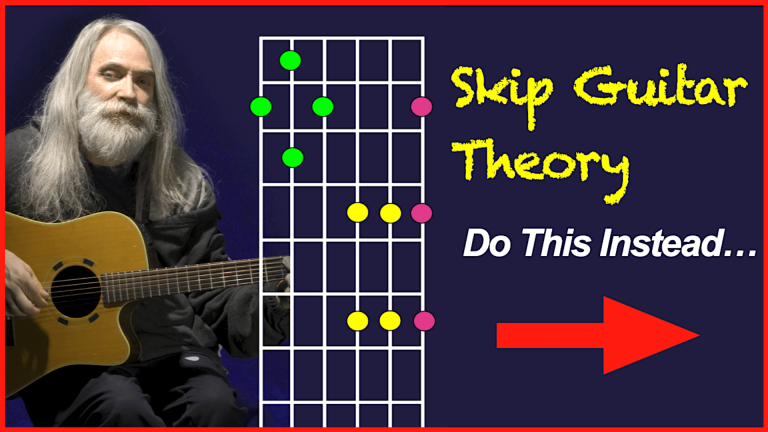
Frequently Asked Questions
- What is the main point of this guitar lesson?
The core idea is to practice your modes by starting at different points within the pattern—specifically from the middle or the end—instead of always starting from the lowest root note. - What key are the examples in this lesson?
All the examples are in the key of G major. - Can you give an example of starting a pattern from the end?
If you play a G major scale that ends on the 8th fret of the high E string, you should practice starting your improvisations or scale runs from that 8th fret note. - How does this help me get better at guitar?
This method makes you more familiar with the entry points all over the fretboard. It builds confidence in how the scale patterns connect, which allows you to move and improvise more effortlessly and break free from “box” playing. - Can I apply this concept to any mode or scale?
Yes. You can use this practice technique for any mode (like Lydian or Mixolydian, as shown in the lesson) or any scale pattern you know.