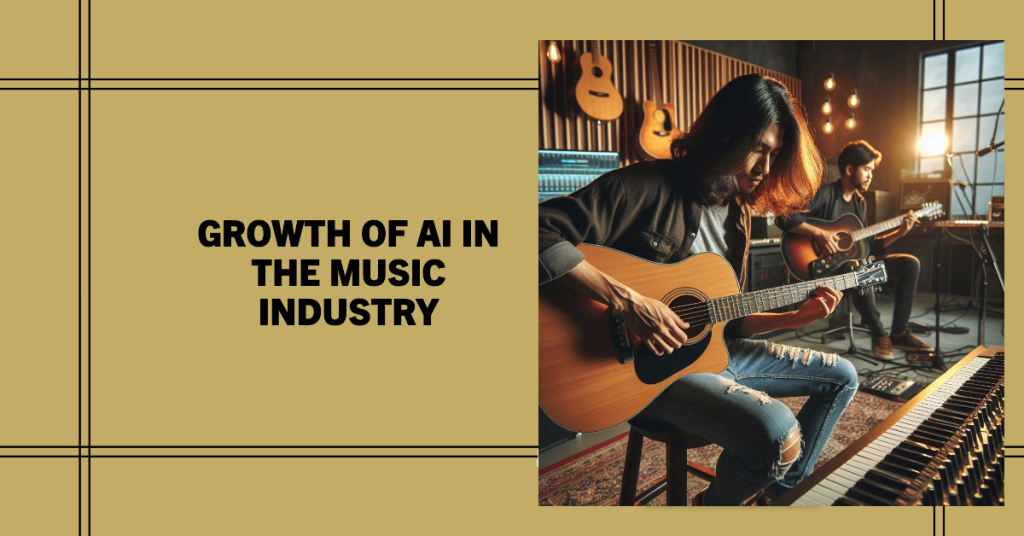
Artificial intelligence (AI) is fundamentally transforming the music industry, driving a technological revolution that is reshaping how music is created, produced, distributed, and consumed. The growth of AI in the music industry is not merely a passing trend; it is a seismic shift that is opening new creative frontiers, streamlining workflows, and redefining the relationship between artists, listeners, and the business of music itself.
As AI-powered tools become more sophisticated and accessible, they are empowering musicians, producers, and industry professionals to unlock unprecedented levels of creativity and efficiency, while also raising complex questions about authorship, ownership, and the future of human artistry.
The Rise of AI in Music: Market Growth & Adoption
The adoption of AI in the music industry has accelerated at an extraordinary pace over the past decade, fueled by advances in machine learning, deep neural networks, and the availability of massive datasets. According to industry research, the global AI music market is projected to reach $6.2 billion by 2025, with some forecasts predicting a surge to $38.7 billion by 2033, reflecting a compound annual growth rate (CAGR) of 25.8% between 2024 and 2033.
This explosive expansion is not limited to major record labels or tech giants; independent artists, small studios, and even hobbyists are increasingly integrating AI-powered tools into their creative processes. Surveys indicate that approximately 60% of musicians now use AI for tasks such as mastering, composition, and even generating promotional artwork. On the consumer side, AI-driven recommendation engines have become ubiquitous, with 74% of internet users leveraging AI to discover or share music, and 82% of listeners reporting that they often cannot distinguish between music created by humans and that generated by AI.
This rapid adoption is being driven by the music industry’s relentless pursuit of innovation, efficiency, and new avenues for creative expression and audience engagement.

How AI is Changing Music Creation and Production
AI is revolutionizing the way music is created and produced, making it possible for anyone with a creative spark to compose, arrange, and produce professional-quality music. AI-powered composition tools such as AIVA, Amper Music, and Jukedeck can now generate entire songs in a wide range of genres, using nothing more than a few keywords or a short text prompt.
These generative models are trained on vast libraries of existing music, enabling them to produce original melodies, harmonies, and rhythms that capture specific moods, styles, or themes. Musicians can collaborate with AI to generate new ideas, refine existing compositions, or even co-write songs, blurring the boundaries between human and machine creativity.
In the production realm, AI is automating traditionally time-consuming tasks such as mixing and mastering. Services like Landr analyze audio tracks and apply mastering effects automatically, making high-quality sound accessible to artists at all levels. AI-powered plugins such as Spike AI provide real-time mixing suggestions, helping producers achieve clarity and balance in even the most complex arrangements.
AI is also being used to correct pitch and timing errors in vocal and instrumental performances, freeing artists to focus more on creative expression rather than technical perfection. Beyond audio, AI is generating cover art, music videos, and promotional visuals, streamlining the entire creative workflow from concept to release.
AI in Music Distribution, Discovery, and Personalization
The impact of AI extends far beyond the studio, fundamentally transforming how music is distributed, discovered, and experienced by listeners. Streaming platforms like Spotify, Apple Music, and YouTube Music rely heavily on AI-driven recommendation algorithms to curate personalized playlists, analyze listening habits, and introduce users to new artists and genres. These systems process vast amounts of data to understand individual preferences, enabling platforms to deliver highly customized listening experiences that keep users engaged and encourage music exploration.
AI-powered music tagging platforms such as Cyanite.ai automatically annotate tracks with metadata such as genre, mood, tempo, and instrumentation, making it easier for both consumers and industry professionals to search, organize, and discover music in massive catalogs.
In live settings, AI technologies are being used to analyze crowd reactions in real time, dynamically adjusting lighting, visuals, and even setlists to enhance the concert experience. This level of personalization and interactivity is creating new opportunities for artists to connect with fans on a deeper level, while also providing valuable insights that can inform marketing and touring strategies.
Key AI Tools and Platforms in the Music Industry
A diverse ecosystem of AI tools and platforms has emerged to support every aspect of the music creation and distribution process. AIVA is recognized as one of the leading AI composers, even earning recognition as a composer by the French music rights organization SACEM. Amper Music offers intuitive interfaces for generating personalized accompaniments and full tracks, making it accessible to both professionals and amateurs.
Landr’s automated mastering service has democratized access to professional-quality sound, while Spike AI’s chatbot interface and DAW integration streamline the mixing process. Cyanite.ai stands out for its advanced music tagging and similarity search capabilities, helping labels and publishers unlock the value of their catalogs.
Other notable platforms include Algoriffix, which provides harmony recommendations and DAW plugins, and MusicLM, which enables high-fidelity, text-conditioned music generation. Cloud-based platforms like BandLab foster collaboration and community, allowing musicians to co-create and share music using AI-powered tools. These technologies are leveling the playing field, enabling creators at all levels to produce, distribute, and promote their music with unprecedented speed and quality.
Opportunities and Benefits for Artists and Industry Stakeholders
The growth of AI in the music industry is unlocking a wealth of opportunities for artists, producers, and other industry stakeholders. For musicians and producers, AI-powered tools offer faster production workflows by automating repetitive and technical tasks, freeing up more time for creative exploration. Independent artists, in particular, benefit from lower barriers to entry, as they can now access professional-grade production, mixing, and mastering tools without the need for expensive studio sessions or specialized expertise.
AI also serves as a creative catalyst, inspiring artists to experiment with new sounds, genres, and compositional techniques that might otherwise be beyond their reach. For the music industry as a whole, AI is driving revenue growth—industry analysts predict that AI-generated music will boost global music industry revenue by over 17% in 2025 alone.
Enhanced discovery tools powered by AI make it easier for labels and publishers to identify promising new talent and monetize hidden gems within their catalogs. Data-driven insights provided by AI systems enable more targeted marketing, audience segmentation, and strategic release planning, ensuring that music reaches the right listeners at the right time. Perhaps most importantly, AI-powered personalization is fostering deeper connections between artists and fans, as listeners receive tailored recommendations and experiences that reflect their unique tastes and preferences.
Challenges: Copyright, Ethics, and Industry Disruption
Despite the immense promise of AI in the music industry, its rapid growth has also brought significant challenges related to copyright, ethics, and industry disruption. As AI-generated music becomes increasingly sophisticated, questions about authorship, ownership, and fair compensation have come to the forefront. Many AI systems are trained on vast datasets that include copyrighted material, often without explicit permission or compensation for the original creators.
This raises complex legal and ethical issues about the use of intellectual property and the rights of artists whose work is used to train AI models. Attribution is another major concern—ensuring that human creators receive proper credit when their contributions are incorporated into AI-generated works is a pressing issue.
The rise of deepfake technology, which enables AI to mimic the voices and styles of real artists, poses risks of identity theft and misuse, potentially undermining the authenticity of musical expression. There are also concerns about job displacement, as AI automates roles in composition, production, and even performance, challenging traditional career paths in the industry.
In response, the music industry is beginning to unite around principles for responsible AI use, with organizations such as Universal Music Group, Roland, and BandLab endorsing guidelines to protect human creativity and ensure ethical innovation. Ongoing dialogue among artists, technologists, and policymakers will be essential to navigate these challenges and ensure a fair and sustainable future for music.
Future Trends: Human-AI Collaboration and Regulation
Looking ahead, the future of AI in the music industry will be shaped by deeper collaboration between humans and machines, as well as evolving legal and regulatory frameworks. Rather than replacing human musicians, AI is increasingly being designed to augment and enhance the creative process, serving as a collaborative partner that can spark new ideas, suggest novel arrangements, and support complex compositional and therapeutic endeavors.
Advances in machine learning, including diffusion models and transformer-based architectures, are enabling even more nuanced and high-quality music generation, further blurring the lines between human and AI-created works.
As these technologies become more integrated into the fabric of music-making, the industry will need to adapt by developing new standards for attribution, compensation, and ethical use.
Legal frameworks are also evolving to address the unique challenges posed by AI-generated music, with ongoing debates about copyright, licensing, and the definition of authorship. Policymakers and industry leaders are working together to strike a balance between fostering innovation and protecting the rights of creators.
Ultimately, the convergence of human artistry and artificial intelligence promises to make the future of music more dynamic, accessible, and inspiring than ever before.

Frequently Asked Questions (FAQ)
Q1: How is AI used in music creation?
AI is used in music creation by generating melodies, harmonies, lyrics, and even full compositions based on text prompts or musical input. Musicians can collaborate with AI to co-write songs, generate accompaniment, and experiment with new genres or styles. AI also assists with technical aspects such as mixing, mastering, and correcting performance errors, making professional-quality production accessible to all.
Q2: Can AI-generated music be copyrighted?
The question of copyright for AI-generated music is complex and still evolving. In many jurisdictions, current laws do not clearly define ownership of works created by non-human entities. When AI systems are trained on copyrighted material without permission, additional legal and ethical issues arise regarding the use of intellectual property and fair compensation for original creators.
Q3: What are the best AI tools for musicians?
Some of the most popular AI tools for musicians include AIVA (for composition), Amper Music (for songwriting and accompaniment), Landr (for automated mastering), Spike AI (for mixing assistance), Cyanite.ai (for music tagging and catalog insights), and BandLab (for AI-driven collaboration and community). These tools cover a wide range of creative and technical needs in music production.
Q4: Will AI replace human musicians?
While AI is automating many technical aspects of music creation and production, it is unlikely to replace human musicians entirely. Instead, AI is being used as a creative partner, augmenting human artistry and enabling new forms of collaboration. The human element—emotional expression, storytelling, and cultural context—remains central to meaningful musical experiences.
Q5: How does AI personalize the music listening experience?
AI personalizes music listening by analyzing user behavior, preferences, and listening habits to curate playlists, recommend new artists, and introduce listeners to new genres. AI-driven systems can also adjust live performances in real time based on audience reactions, creating highly tailored and interactive experiences.
Q6: What are the main challenges with AI in music?
The main challenges include copyright and licensing issues, ethical concerns about attribution and imitation, potential misuse of deepfake technology, and the risk of job displacement for traditional roles in the music industry. Addressing these challenges requires ongoing collaboration among artists, technologists, industry leaders, and policymakers.
Q7: How big is the AI music market?
The AI music market is expected to reach $6.2 billion in 2025 and grow to $38.7 billion by 2033, with rapid adoption across all segments of the industry, from independent artists to major labels and streaming platforms.
The growth of AI in the music industry is ushering in a new era of creativity, efficiency, and opportunity. From AI-powered composition and production tools to personalized discovery and interactive fan experiences, artificial intelligence is transforming every facet of the music ecosystem.
While the rapid adoption of AI brings significant challenges, especially in terms of copyright, ethics, and industry disruption, it also offers immense potential for innovation, artistic expression, and audience engagement.
As AI and human creativity continue to converge, the future of music promises to be more dynamic, accessible, and inspiring than ever before. By embracing responsible innovation and fostering collaboration between humans and machines, the music industry can ensure that AI serves as a powerful force for positive change, shaping the soundscape of tomorrow.