Guitar playing is an art form that has captivated audiences for decades. From the haunting melodies of blues music to the electrifying riffs of rock and roll, the guitar has become a symbol of creativity and self-expression.
However, behind the enchanting sounds lies a hidden danger: hearing loss.
The Silent Threat
When we think about musicians damaging their hearing, it’s often associated with drummers or fans standing too close to massive speaker stacks at concerts. However, what many people fail to realize is that guitar players are equally susceptible to hearing loss due to their prolonged exposure to amplified sound.
The shocking truth is that most guitar players unknowingly put their auditory system at risk every time they plug in and play.

An Uncharted Territory
The issue of hearing loss among guitar players has long been overshadowed by more widely known causes like occupational noise exposure or aging. Consequently, there exists a lack of awareness around the potential dangers.
Without proper knowledge or preventive measures, many guitarists unknowingly venture into uncharted territory where auditory health hangs in balance.
The Time for Awareness
It’s time to shine a spotlight on this important issue that affects guitar players of all ages and genres. By understanding the mechanisms behind hearing loss in guitarists, we can equip ourselves with the knowledge needed to protect and preserve our most precious sense – the gift of sound.
Understanding Sound and Hearing
Unveiling the Symphony of Sound Waves
Sound, as we perceive it, is a mesmerizing symphony that dances through the air. But have you ever wondered how these vibrations seamlessly travel from their source to our ears?
Sound waves are created when an object vibrates, be it the strings of a guitar or a human voice.
These vibrations create compressions and rarefactions in the surrounding medium, usually air. As they propagate through space, at an astonishing speed of approximately 343 meters per second (767 miles per hour), sound waves carry energy from one point to another moving effortlessly through different mediums – be it air, water, or solid objects like walls or floors.
Perceiving Sound with Our Auditory System
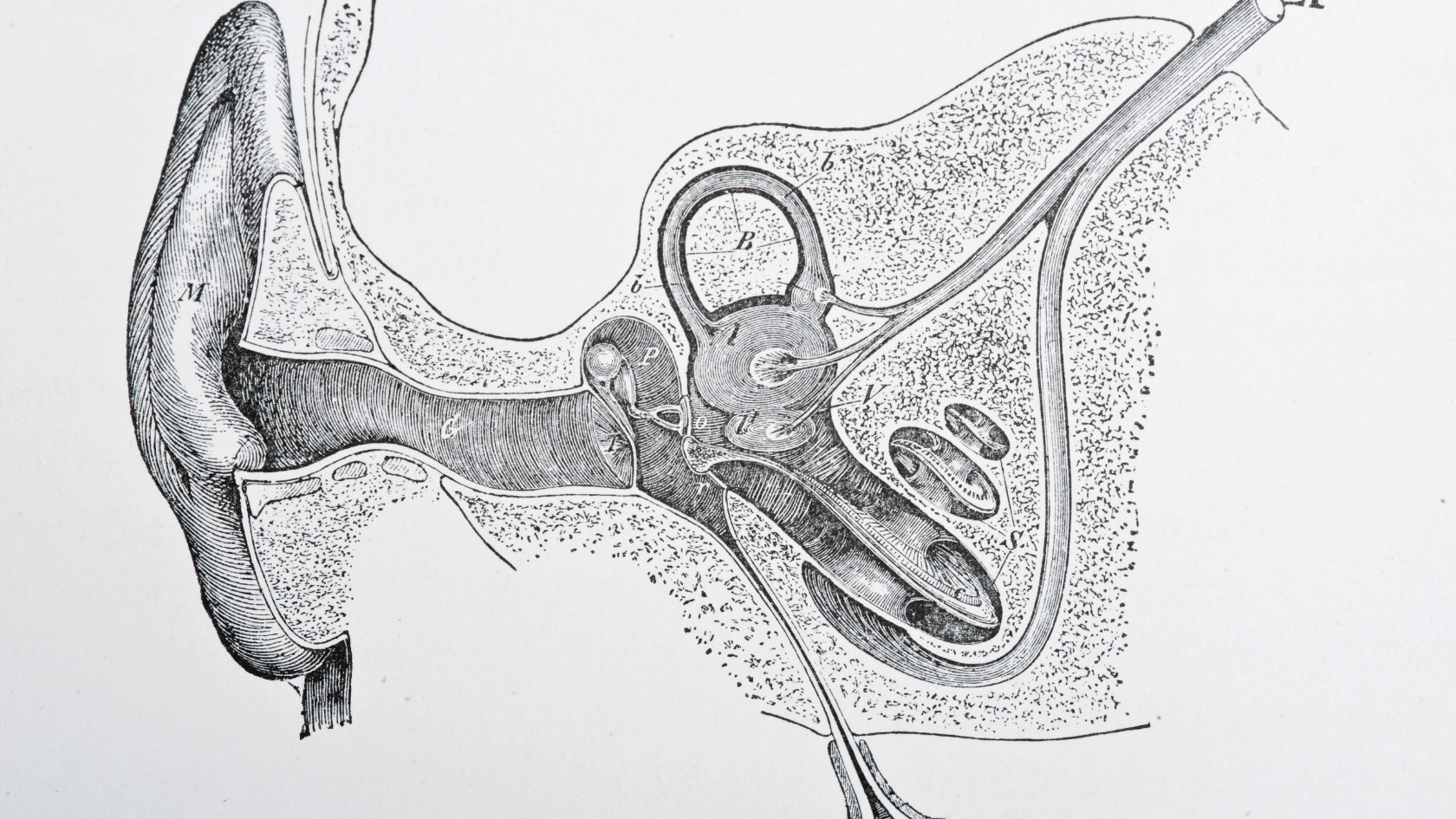
Our auditory system is an awe-inspiring masterpiece that brings music to life and allows us to experience captivating melodies and harmonies. It comprises three main components: the outer ear, middle ear, and inner ear.
The journey begins with our external auricle (pinna), which captures sound waves traveling in our vicinity and funnels them into the ear canal. The ear canal channels these sound waves toward the eardrum (tympanic membrane), which separates the outer ear from the middle ear.
Once past this gateway, sound encounters a chain reaction within our middle ear. This intricate mechanism involves three tiny bones called ossicles – namely, the malleus (hammer), incus (anvil), and stapes (stirrup).
These bones work together to amplify the vibrations received from the eardrum and transmit them to the inner ear. These amplified vibrations reach their destination: the cochlea, an astonishingly complex and delicate structure within our inner ear.
The cochlea is snail-shaped and contains thousands of microscopic hair cells nestled in fluid-filled canals. These hair cells are responsible for converting mechanical vibrations into electrical signals that can be interpreted by our brain as sound.
Appreciating the Delicate Nature of Our Auditory System
While our auditory system is a marvel of nature, it is also incredibly fragile. The delicate nature of our hearing mechanism makes it susceptible to damage from excessive or prolonged exposure to loud sounds, such as those produced by guitars played at high volumes.
The intricate hair cells within the cochlea are particularly vulnerable. Once damaged, they do not regenerate, leading to permanent hearing loss.
Moreover, exposure to intense sound can also cause temporary threshold shifts (TTS), where our hearing becomes temporarily impaired after exposure but recovers over time. Repeated TTS episodes can eventually lead to permanent damage.
Understanding the fragility of our auditory system highlights why it is crucial for guitar players and music enthusiasts alike to be aware of potential risks and take proactive steps to protect their hearing health.
The Mechanics of Guitar Playing
Overview of different types of guitars and their amplification systems
When it comes to guitars, there is a diverse range of options available to musicians. The most common types include acoustic, electric, and bass guitars.
Acoustic guitars rely solely on the resonating soundboard to amplify the vibrations produced by plucking or strumming the strings. These guitars are popular among folk, country, and singer-songwriter genres due to their warm and natural tones.
Electric guitars, on the other hand, require external amplification systems to produce sound. They feature magnetic pickups that convert string vibrations into electrical signals which are then sent out through an amplifier.
How sound is produced when playing a guitar
When a guitarist plucks or strums a string on any type of guitar (acoustic or electric), it sets the string into motion which creates vibrations in the air surrounding it. These vibrations travel as sound waves through space until they reach our ears, and are perceived as sound.
In an acoustic guitar, the vibrations of the plucked or strummed strings are transferred to the soundboard, a wooden surface responsible for amplifying the sound. The soundboard resonates sympathetically with the vibrating strings, projecting their vibrations into the surrounding air.
For electric guitars, things work a little differently.
Once a string is plucked or strummed, its vibrations are detected by magnetic pickups located beneath the strings. These pickups consist of magnets wrapped in coils of wire which generate small electrical currents when affected by string vibrations.
The electrical signals are then sent through cables to an amplifier that processes and boosts them into audible sounds using various controls and effects such as equalization (EQ), gain/distortion, reverb, delay, and more.
The mechanics involved in producing guitar sounds may seem complex, but it is this intricacy that allows musicians to create a wide range of tones and effects that captivate audiences across genres and styles.
Amplifiers and Volume Levels
Why guitar players tend to crank up the volume on their amps
When it comes to playing the electric guitar, there is a certain allure to cranking up the volume on an amplifier. For many guitarists, achieving a powerful and commanding sound is part of the exhilaration of playing live or even during practice sessions. The desire to create a wall of sound that resonates with the musician and the audience often leads guitarists to push their amplifiers to the limit.
The impact of high volume levels on hearing health
While turning up your amp may provide an immediate rush during performance or practice sessions, it comes at a great cost – your hearing health. Our auditory system is highly sensitive, and is designed to process sounds within an optimal range. When exposed to excessively loud music for prolonged periods, such as from cranked-up amplifiers, irreversible damage can occur.
The impact on hearing health should not be underestimated. High volume levels put significant stress on delicate structures within our ears like hair cells in the cochlea responsible for converting sound vibrations into electrical signals that our brains interpret as sound.
Over time, these hair cells become damaged or die off due to excessive noise exposure, resulting in permanent hearing loss. Moreover, prolonged exposure to loud music can lead to tinnitus – a condition characterized by persistent ringing or buzzing sounds in the ears.
This intrusive noise can be debilitating, causing sleep disturbances, concentration difficulties, and even psychological distress.
It is crucial for guitar players to be aware of the potential consequences and take necessary precautions to protect their hearing.
Noise-Induced Hearing Loss (NIHL)
The Silent Threat to Guitar Players’ Ears
When it comes to the world of music, guitar players are often revered for their skillful performances and ability to captivate audiences. However, there is a dark side lurking behind the mesmerizing melodies. It is called Noise-Induced Hearing Loss (NIHL), and it poses a significant risk to guitar players who are exposed to high sound levels for prolonged periods of time.
Understanding NIHL
Noise-Induced Hearing Loss refers to a type of hearing impairment that occurs as a result of exposure to loud sounds or music. In the case of guitar players, who are constantly surrounded by amplifiers and sound systems, this risk becomes particularly relevant.
Common Misconceptions About Hearing Damage in Guitar Players
When it comes to hearing damage in guitar players, one prevailing myth is that only rock musicians are at risk. While it’s true that loud concerts and gigs can pose a significant threat to hearing health, the reality is that all guitar players, regardless of their genre of music, are susceptible to damage.
Why age doesn’t necessarily protect against hearing loss
Another common misconception is that young guitar players don’t need to worry about hearing loss because they have robust auditory systems. This assumption couldn’t be further from the truth. While it’s accurate that older individuals may be more likely to experience age-related hearing loss, noise-induced hearing loss (NIHL) is not discriminatory based on age.
The delicate hair cells within our inner ears can sustain irreversible damage when exposed to loud sounds for extended periods, regardless of whether you’re 20 or 60. It’s crucial for all guitar players, regardless of age, to take proactive measures to protect their hearing.
Preventive Measures For Maintaining Healthy Hearing While Playing Guitar
Taking steps toward preventing hearing damage is essential for every musician who values their auditory well-being.
Here are some practical preventive measures:
1. Invest in quality ear protection: High-fidelity earplugs specifically designed for musicians can preserve sound quality while reducing harmful decibel levels.
2. Practice mindful volume control: Be conscious of the volume at which you play. Experiment with lower levels and avoid unnecessary exposure to excessive decibels.
3. Take regular breaks: Give your ears time to rest during practice sessions or performances. Frequent breaks can reduce the cumulative effect of noise exposure.
4. Utilize sound barriers: Consider using sound-absorbing materials in your practice space, such as acoustic panels or foam, to dampen the noise and protect your hearing long-term.:

The damaging impact of loud music on guitar players’ hearing should not be underestimated. It is crucial to dispel myths surrounding hearing loss in musicians and recognize that all guitarists are at risk, regardless of genre or age.