The Rhythmic Remedy: How Playing Guitar Benefits People with ADHD
For individuals with Attention Deficit Hyperactivity Disorder (ADHD), the world can feel like a constant barrage of stimuli, making focus, emotional regulation, and impulse control significant challenges.
While traditional therapies and medications are cornerstones of management, many are discovering a powerful complementary tool in the strings of a guitar.
Learning to play this instrument offers a unique combination of structure, creativity, and sensory engagement that can profoundly benefit the ADHD brain.
Strengthening Focus and Attention
A primary challenge for those with ADHD is sustaining attention. The structured nature of learning and playing the guitar provides an engaging way to build this cognitive muscle.
The Power of Structure and Rhythm
Music is inherently structured with a clear beginning, middle, and end. This predictability is soothing for a mind that often feels chaotic. The process of learning chords, following song structures, and keeping a steady rhythm requires sustained concentration. This consistent engagement helps to train the brain, improving the ability to focus for longer periods, a skill that can translate to other areas of life like academics and work.
A Healthy Outlet for Hyperfocus
A notable trait of ADHD is the ability to “hyperfocus” on tasks that are highly interesting. Because playing guitar is an enjoyable and rewarding activity, it can capture this intense focus, channeling it into a productive and creative endeavor instead of it being directed at less constructive distractions.

A Creative Conduit for Excess Energy and Emotion
The hyperactivity and emotional dysregulation associated with ADHD can be difficult to manage. The guitar provides a physical and emotional release valve.
Channeling Hyperactivity
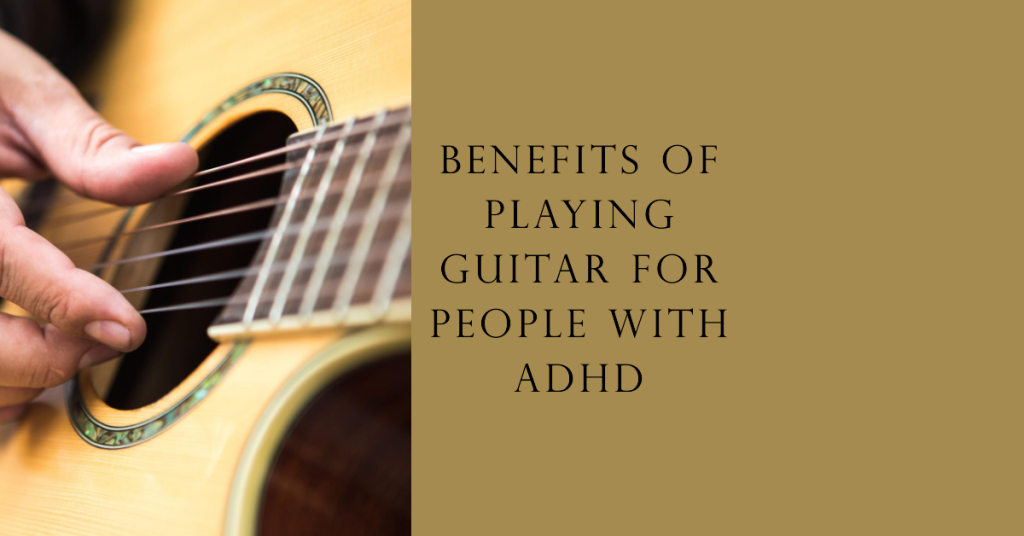
The physical act of strumming, picking, and fretting notes offers a constructive outlet for restless energy. For someone who struggles with fidgeting, the guitar can become a way to channel that need for movement into something rhythmic and expressive.
Emotional Expression and Regulation
Music is a powerful medium for expressing feelings that can be difficult to verbalize. Strumming a chord with vigor or picking out a gentle melody can serve as a safe and healthy way to process frustration, anxiety, or excitement. This creative expression can lead to greater emotional stability and self-awareness.
Enhancing Cognitive Function and Building Confidence
Beyond focus and emotional regulation, playing the guitar has been shown to boost several key cognitive functions and improve self-esteem.
Boosting Executive Functions
Learning an instrument engages multiple areas of the brain at once. This mental workout has been shown to improve executive functions—the skills that help with planning, organization, and memory—which are often areas of difficulty for individuals with ADHD. Memorizing chord shapes, scales, and song structures directly exercises and strengthens working memory.
Developing Motor Skills and Coordination
Playing the guitar requires intricate coordination between both hands, which perform different tasks simultaneously. This enhances fine motor skills and strengthens the brain-body connection, supporting broader cognitive development.
The Reward of Accomplishment
Mastering a new chord, playing a favorite song, or simply creating a pleasing sound provides an immediate sense of accomplishment. For individuals who may struggle with low self-esteem due to academic or social challenges, these small wins are powerful confidence boosters. This can create a positive feedback loop, where success fuels motivation and a desire to continue learning.

FAQ: Your Questions About Learning Guitar with ADHD
Is it hard to learn guitar with ADHD?
While ADHD presents unique challenges like maintaining focus during practice, it also offers strengths like creativity and the ability to hyperfocus. With the right strategies, such as breaking practice into shorter sessions and focusing on enjoyable songs, learning guitar is very achievable.
How long should practice sessions be?
Shorter, more frequent practice sessions are often more effective. Starting with 10-15 minute focused sessions can prevent burnout and make practice feel less overwhelming. A timer can also be a helpful tool to maintain focus.
What type of guitar is best for a beginner with ADHD?
Some find that electric or nylon-string guitars are easier to start with, as they can be gentler on the fingertips, reducing a potential source of frustration. Ultimately, the best guitar is one that inspires you to play.
Can playing guitar replace ADHD medication?
Playing the guitar should be considered a complementary therapy, not a replacement for professional medical advice or prescribed treatments. It is a valuable tool that can be used alongside traditional approaches to help manage symptoms.
How do I stay motivated when I get bored or frustrated?
Focus on learning songs you genuinely love. This keeps the process fun and engaging. Setting small, specific goals, like learning one new riff per week, can make the journey feel more manageable and provide regular feelings of accomplishment. Don’t be afraid to switch things up and allow for “free play” time without any specific goals.