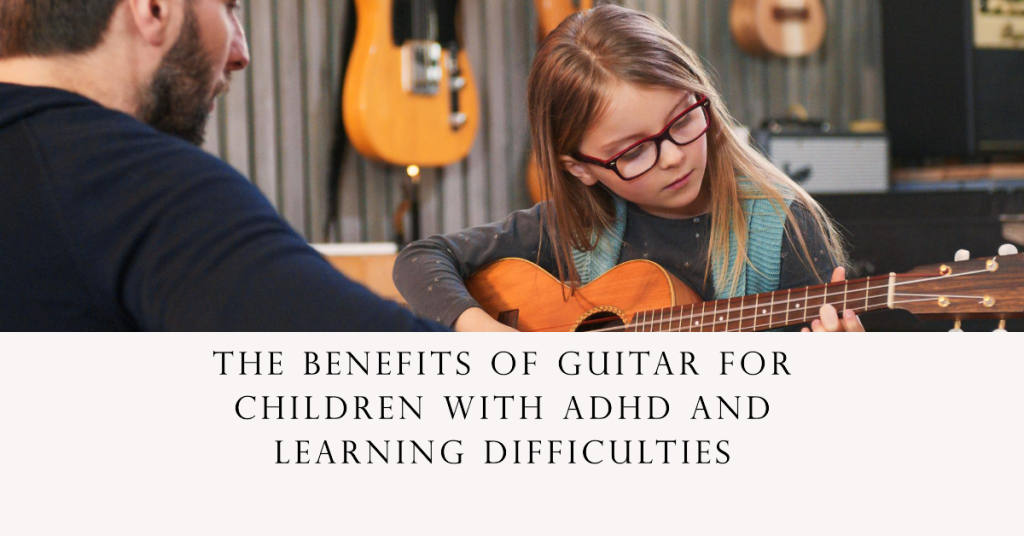
In recent years, music education has gained recognition as a powerful tool for supporting children with Attention Deficit Hyperactivity Disorder (ADHD) and various learning difficulties. Among the many instruments available, the guitar stands out as a particularly beneficial choice.
This article explores the multifaceted advantages of guitar playing for children facing these challenges, offering insights into how this musical journey can positively impact their cognitive, emotional, and social development.
Disclaimer: This article is intended for informational purposes only and should not be considered as medical or educational advice. While guitar playing can offer numerous benefits, it is not a substitute for professional medical treatment or specialized educational interventions for ADHD or learning difficulties. Every child is unique, and the effects of music education may vary. Always consult with healthcare professionals, educators, and therapists for personalized guidance regarding your child’s specific needs and capabilities.

Understanding ADHD and Learning Difficulties
Before delving into the benefits of guitar, it’s crucial to understand the challenges faced by children with ADHD and learning difficulties:
- Difficulty maintaining focus and attention
- Struggles with impulse control
- Challenges in organizing tasks and managing time
- Potential issues with fine motor skills and coordination
- Difficulties with reading, writing, or mathematics
These challenges can significantly impact a child’s academic performance and self-esteem. However, learning to play the guitar can offer a unique set of benefits that address many of these issues.
Cognitive Benefits of Guitar Playing
Improved Focus and Concentration
Learning to play the guitar requires sustained attention, which can help children with ADHD develop their ability to focus. The structured nature of guitar practice provides a framework for improving concentration skills that can transfer to other areas of life.
Enhanced Memory Function
Memorizing chords, scales, and songs exercises the brain’s memory centers. This can be particularly beneficial for children with learning difficulties, as it strengthens their ability to retain and recall information.
Boosted Problem-Solving Skills
Learning to play a musical instrument involves complex problem-solving. From figuring out fingerings to understanding music theory, guitar playing constantly challenges the brain to think critically and creatively.
Emotional and Psychological Benefits
Increased Self-Esteem and Confidence
Mastering new skills on the guitar provides a sense of accomplishment, boosting self-esteem and confidence. This can be especially important for children who may struggle in traditional academic settings.
Stress Reduction and Emotional Regulation
Playing music has been shown to reduce stress and anxiety. For children with ADHD, who often experience heightened levels of stress, guitar playing can serve as a calming and regulating activity.
Improved Emotional Expression
Music offers a non-verbal means of expression, allowing children to communicate emotions that they might find difficult to express otherwise. This can be particularly beneficial for those with learning difficulties related to language.
Physical and Motor Skill Development
Enhanced Fine Motor Skills
Playing guitar requires precise finger movements, which can significantly improve fine motor skills. This can be especially beneficial for children who struggle with activities like writing or tying shoelaces.
Improved Hand-Eye Coordination
The coordination required between reading music (or tablature) and playing the instrument enhances hand-eye coordination, a skill that can transfer to many other areas of life.
Better Posture and Body Awareness
Proper guitar technique emphasizes good posture, helping children become more aware of their body positioning. This can be particularly helpful for children with ADHD who may struggle with physical restlessness.

Social and Communication Benefits
Increased Social Interaction
Learning guitar often involves group lessons or playing with others, providing opportunities for social interaction and development of social skills.
Non-Verbal Communication Skills
Music is a form of non-verbal communication, allowing children who struggle with verbal expression to connect with others through a different medium.
Improved Listening Skills
Playing in a group or with a teacher requires careful listening, a skill that can benefit children in many aspects of their lives, including academic and social settings.
Implementing Guitar Lessons for Children with ADHD and Learning Difficulties
Finding the Right Instructor
Look for guitar teachers who have experience working with children with ADHD or learning difficulties. They should be patient, understanding, and able to adapt their teaching methods to suit individual needs.
Structuring Lessons Appropriately
- Keep lessons short and focused
- Use visual aids and hands-on learning techniques
- Incorporate movement and breaks as needed
- Set clear, achievable goals for each lesson
Creating a Supportive Practice Environment
- Establish a consistent practice routine
- Minimize distractions during practice time
- Use positive reinforcement and celebrate small victories
- Encourage regular performances to boost confidence

FAQ
Q: At what age can a child with ADHD or learning difficulties start learning guitar?
A: While it varies by individual, many children can start around age 6-7. The key is to assess the child’s interest and ability to hold and manipulate the instrument.
Q: Are there specific types of guitars better suited for children with these challenges?
A: Smaller-sized guitars or ¾ scale guitars are often easier for children to handle. Nylon-string guitars can be gentler on fingers for beginners.
Q: How long should practice sessions be for children with ADHD?
A: Short, frequent sessions (10-15 minutes) are often more effective than longer ones. Adjust based on the child’s attention span and interest.
Q: Can learning guitar help with academic performance?
A: Yes, the skills developed through guitar playing, such as improved focus, memory, and problem-solving, can positively impact academic performance.
Q: Are there any risks or downsides to learning guitar for children with ADHD or learning difficulties?
A: While the benefits generally outweigh the risks, it’s important to ensure that guitar learning doesn’t become a source of frustration. Choose a supportive teacher and maintain realistic expectations.
Learning to play the guitar offers a wealth of benefits for children with ADHD and learning difficulties. From cognitive improvements to emotional regulation and social skill development, the guitar can be a powerful tool for growth and self-expression. By providing structured yet creative outlets, guitar lessons can help these children build confidence, improve focus, and develop skills that extend far beyond music. As with any educational approach, it’s essential to tailor the learning experience to each child’s unique needs and abilities, ensuring a positive and rewarding musical journey.