As a guitarist and composer, I’ve always been fascinated by the world of guitar pedals. From the classic tones of vintage fuzz boxes to the cutting-edge sounds of modern multi-effects units, these devices have been an integral part of my musical journey. However, as I’ve watched technology evolve at a breakneck pace, I’ve begun to wonder: are guitar pedals dead?
The Problem with My Guitar Pedalboard
Let me give you a glimpse into my current setup. My pedalboard is a complex beast, featuring everything from EQ pedals and compressors to reverb, delay, and even a clock. While this setup allows me to craft my signature sound, it’s far from practical when it comes to touring and traveling.
As you can see in the video, my pedalboard is quite messy. I have to deal with a tangled web of cables, constant power supply issues, and the ever-present threat of noise and signal degradation. It’s a headache to manage, especially when I’m flying around for gigs and tours.
Discovering the Power of Digital Modeling for Guitar
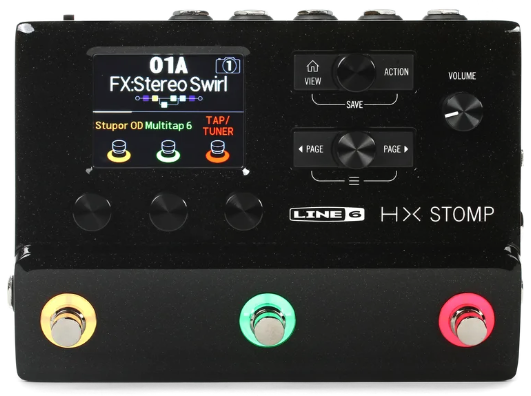
That’s where my friend Noam comes in. He introduced me to the world of digital modeling and multi-effects units, specifically the Line 6 HX Stomp. This powerful device promises to condense my entire pedalboard into a single, compact unit.
At first, I was skeptical. Could a digital unit really replicate the sound and feel of my beloved analog pedals? But as Noam and I began to dive into the HX Stomp, I was blown away by the possibilities.
Crafting My Sound in the Digital Realm
The first step was to recreate my basic guitar sound. We started with a compressor, experimenting with different models like the LA-2A emulation. It took some tweaking, but we were able to achieve a sound that was close to my analog setup.
Next, we moved on to EQ and amp modeling. The HX Stomp offered a vast array of options, from classic Fender amps to modern high-gain monsters. By carefully adjusting parameters like mic placement and bias, we were able to craft a tone that felt familiar yet exciting.
Of course, no guitar sound is complete without effects. The HX Stomp delivered in spades, offering lush reverbs, authentic-sounding delays, and even a convincing emulation of my beloved POG octave pedal.
Putting It All to the Test
After spending hours tweaking and refining, it was time for the ultimate test. We A/B’d the sound of my analog pedalboard against the HX Stomp, and the results were shocking. While there were subtle differences, the overall character and feel of my sound were remarkably close.
But the real magic happened when we started exploring the additional features of the HX Stomp. With the ability to create complex signal chains, parallel processing, and even use the unit as a full-fledged audio interface, the possibilities seemed endless.
Embracing the Future of Guitar Effects
As I reflect on this experience, I’ve come to a powerful realization. While I’ll always have a soft spot for analog pedals and the unique character they bring to the table, I can’t deny the benefits of digital modeling and multi-effects units.
The portability, flexibility, and consistency offered by devices like the HX Stomp are game-changers for touring musicians like myself. Being able to fit my entire pedalboard into a backpack and know that my sound will be the same every night is a dream come true.
Of course, there will always be a place for analog pedals in my heart and my studio. But as technology continues to evolve, I’m excited to embrace the future of guitar effects and see where this journey takes me.
The Bottom Line
So, are guitar pedals dead? Not quite. But the rise of digital modeling and multi-effects units is undeniable. As more and more guitarists discover the power and flexibility of these devices, we can expect to see a shift in the way we approach our rigs.
My advice? Keep an open mind. Experiment with new technologies, but never lose sight of what matters most: the music. Whether you’re a die-hard analog purist or a digital convert, the key is to find the tools that inspire you to create and express yourself in new and exciting ways.
As for me, I’m excited to continue exploring the possibilities of the HX Stomp and other digital devices. Who knows what kind of music I’ll be able to create with these powerful tools at my fingertips?
One thing is for sure: the future of guitar effects is bright, and I can’t wait to see where it takes us.

Frequently Asked Questions
- Q: What inspired you to explore digital modeling and multi-effects units?
A: As much as I love my analog pedalboard, it’s become increasingly challenging to manage, especially when touring and traveling. The tangled cables, power supply issues, and potential for noise and signal degradation have made me realize that I need a more practical solution. That’s when my friend Noam introduced me to the Line 6 HX Stomp, and I was intrigued by the possibility of condensing my entire pedalboard into a single, compact unit. - Q: How close were you able to get the HX Stomp to replicating the sound of your analog pedalboard?
A: I was honestly shocked at how close we were able to get. While there were some subtle differences, the overall character and feel of my sound were remarkably similar. We spent hours tweaking parameters like compression, EQ, amp modeling, and effects, and the results were really impressive. It’s a testament to how far digital modeling technology has come in recent years. - Q: What are some of the benefits of using a multi-effects unit like the HX Stomp?
A: There are quite a few benefits that I’ve discovered. First and foremost, the portability is a game-changer. Being able to fit my entire rig into a backpack is a dream come true for a touring musician like myself. The flexibility and consistency are also huge plusses. With the ability to create complex signal chains, parallel processing, and recall presets instantly, I can adapt my sound to any situation and know that it will be the same every time I plug in. - Q: Does this mean you’ll be abandoning analog pedals altogether?
A: Not at all! I’ll always have a special place in my heart for analog pedals and the unique character they bring to the table. There’s something magical about the tactile experience of stomping on a physical pedal and the slight variations that come with analog circuitry. I can definitely see myself using a hybrid setup, combining the best of both analog and digital worlds. - Q: What advice would you give to guitarists who are considering making the switch to digital modeling?
A: My advice would be to keep an open mind and be willing to experiment. There’s definitely a learning curve when it comes to programming and tweaking a multi-effects unit, but the rewards are well worth it. Take the time to really dive in and explore all the possibilities, and don’t be afraid to think outside the box. At the end of the day, the most important thing is to find the tools that inspire you to create and express yourself in new and exciting ways.
Visit my website: rotemsivan.com.
Join me on Patreon: patreon.com/Rotem/Sivan
See you guys soon! Peace Out